




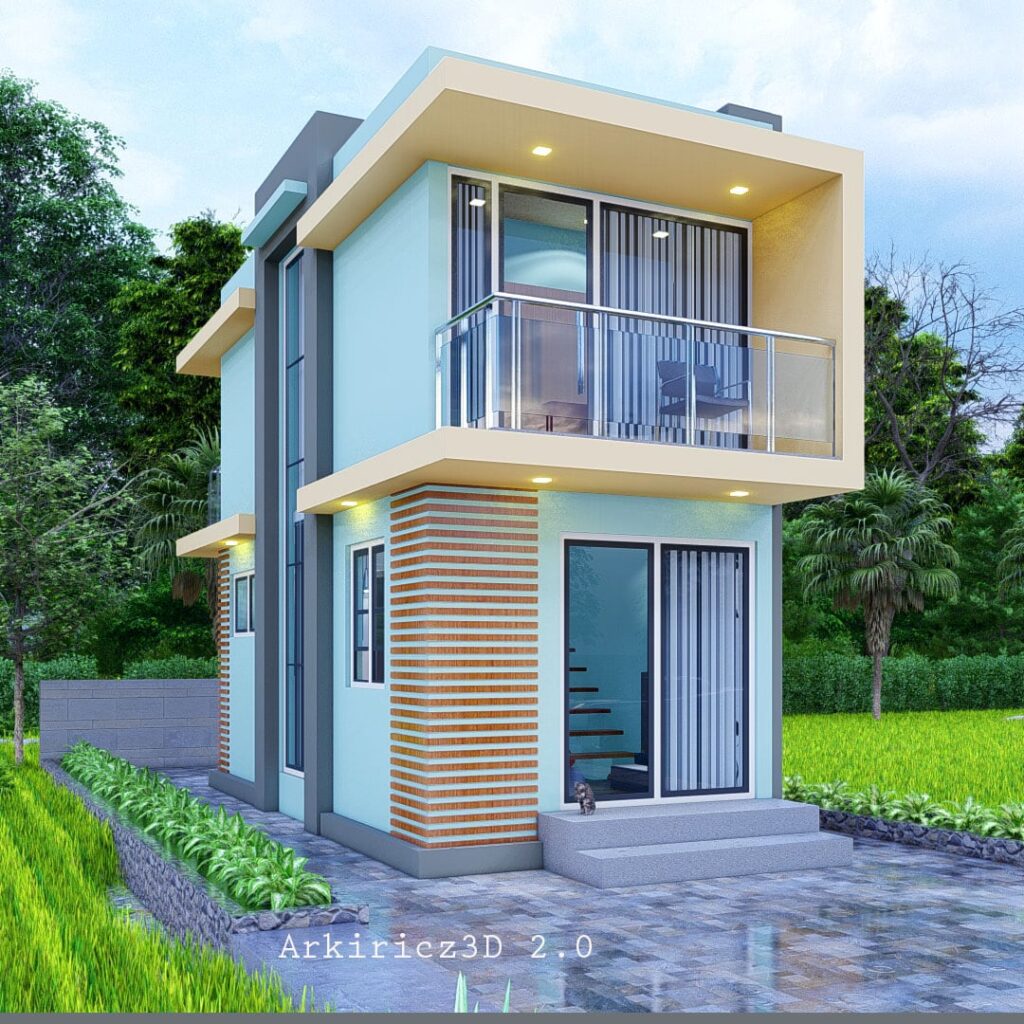
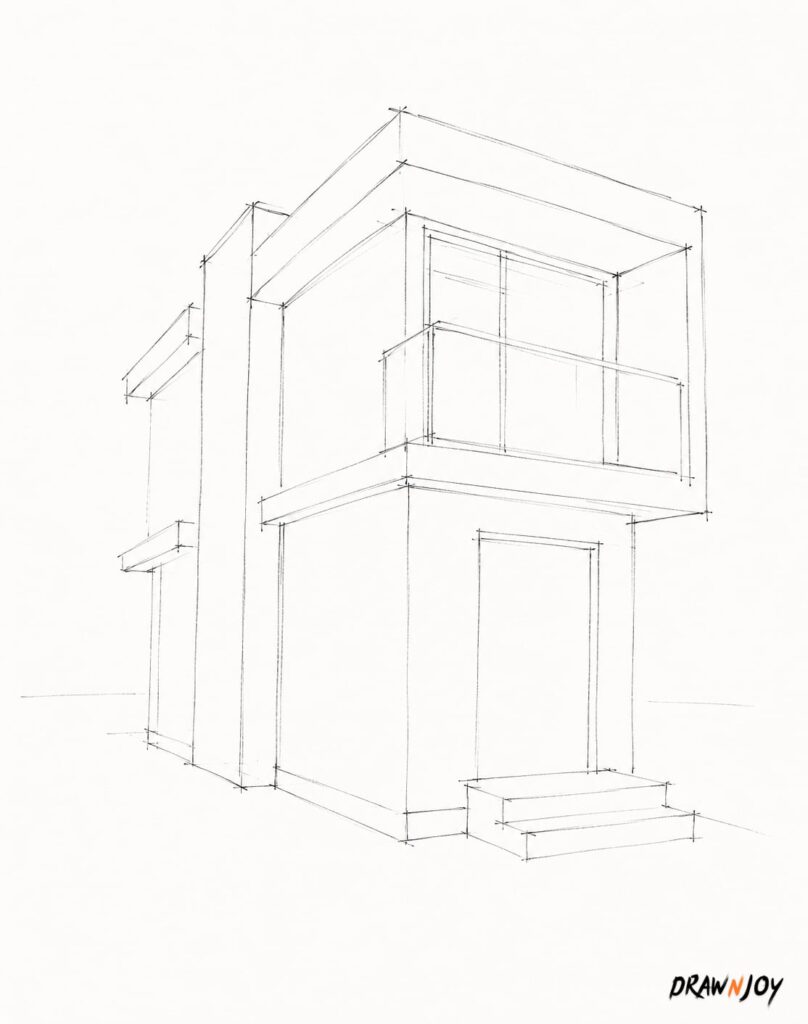
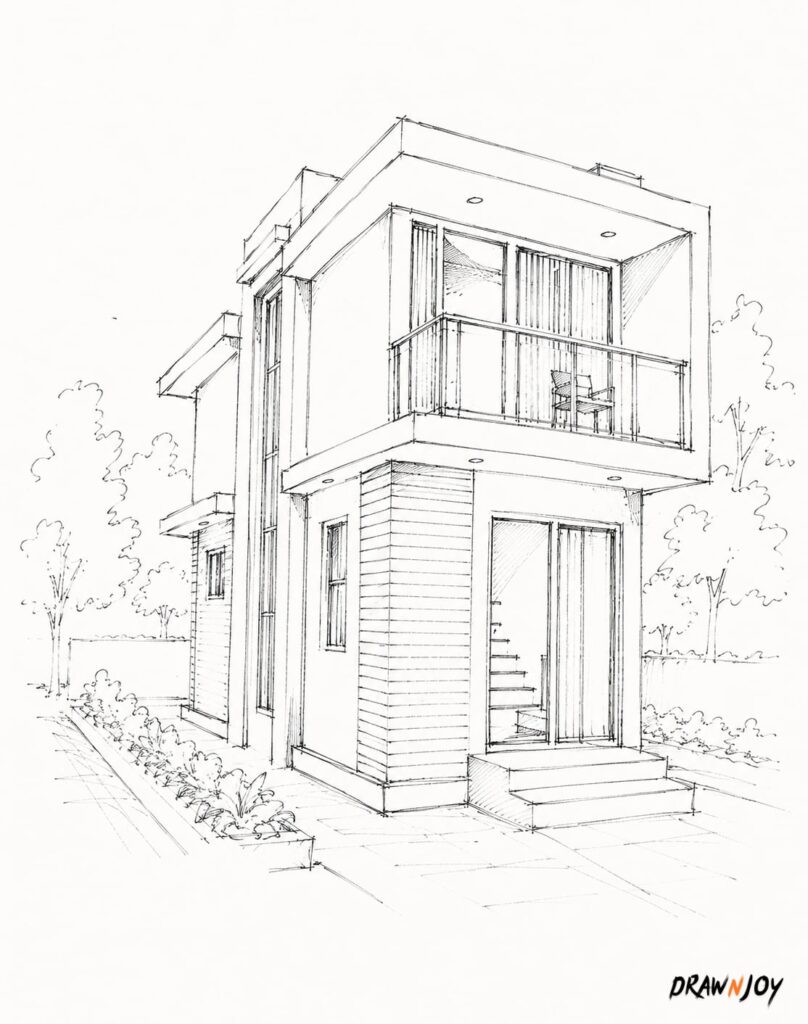
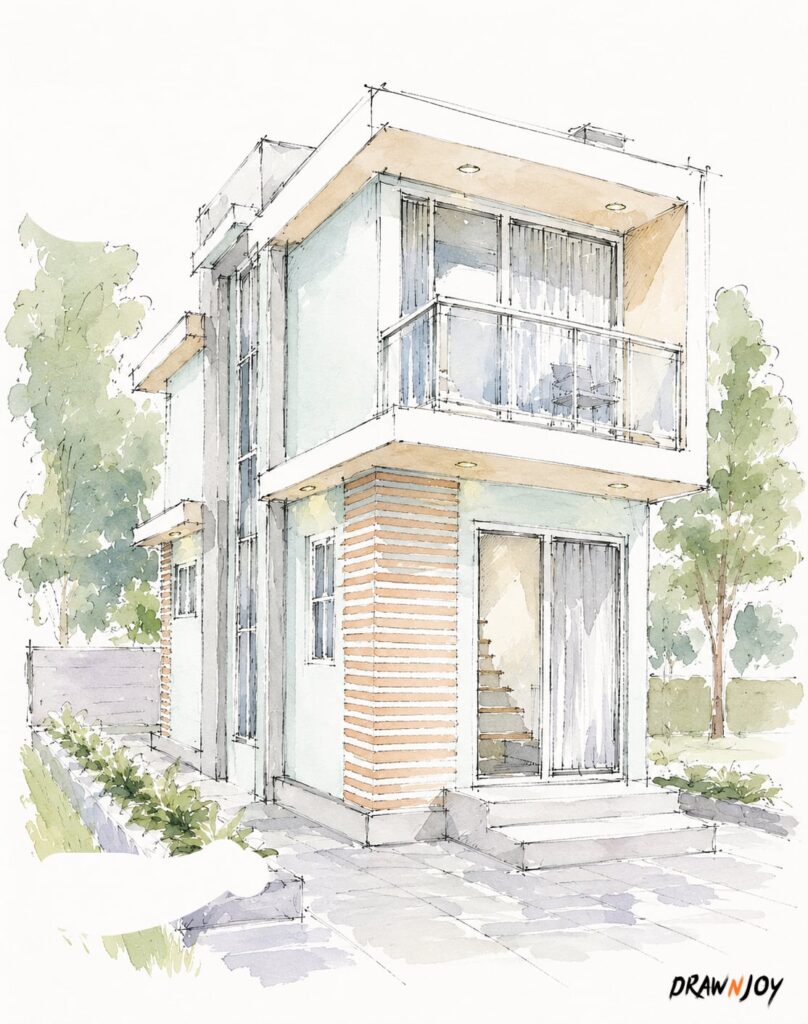
As always, before or after drawing, I like to analyze why I felt drawn to a particular subject and why at this specific moment. Drawing for pure pleasure—free from commissions or financial motives—is a profound expression of our subconscious. Today, after researching the essence of a modern house (see below), I couldn’t help but smile; to me, it signifies a constructive inner dialogue. I believe everyone will find their own unique meaning in what a modern house represents to them.
The Modern House
Modern architecture is defined by the principle that the shape of a building should primarily relate to its intended function or purpose. This results in the removal of “unnecessary” ornamentation.
The use of large, floor-to-ceiling windows is designed to “blur” the boundary between the interior and exterior. This concept, often called biophilic design, aims to connect the inhabitants with nature and natural light.
Modern homes frequently utilize reinforced concrete, steel, and glass. By eliminating interior load-bearing walls, modern design promotes a sense of “flow” and transparency, reflecting a shift toward less formal, more communal living styles.
Psychological Symbolism
In psychology, a house often symbolizes the self. The facade represents the persona (the mask we show the world), while the interior rooms represent different layers of the subconscious.
Choosing a modern house specifically suggests a psychological preference for clarity, efficiency, and logic. It represents a desire to strip away the “clutter” of tradition or emotional baggage in favor of a streamlined, future-oriented mindset.
The prevalence of glass in modern design symbolizes a need for transparency. Psychologically, drawing these open structures can reflect an artist’s desire for openness or a rejection of secrets and hidden spaces.
Drawing a modern house often indicates a drive for mental order, a wish for a “fresh start,” or a subconscious attempt to visualize a structured and stable future.
A Few Tips for Drawing a Modern House
- Mind the Perspective: Use two vanishing points to keep geometric shapes sharp and three-dimensional.
- Vary Line Weight: Use thick lines for the main silhouette and fine lines for window frames to create instant depth.
- Focus on Flat Shadows: Pick one side of the building for a single shadow to define the form. You can mark this in the sketch, but it is most effective when applied during the coloring stage.
- Darken Structural Joints: While coloring, go over corners and intersections with an extra layer of shadow. Darkening these points makes the building look more solid and realistic.
- Balance with Nature: Contrast straight architectural edges with organic, “messy” greenery to make the drawing feel natural.
Music For Drawing
Reference Photo Facebook
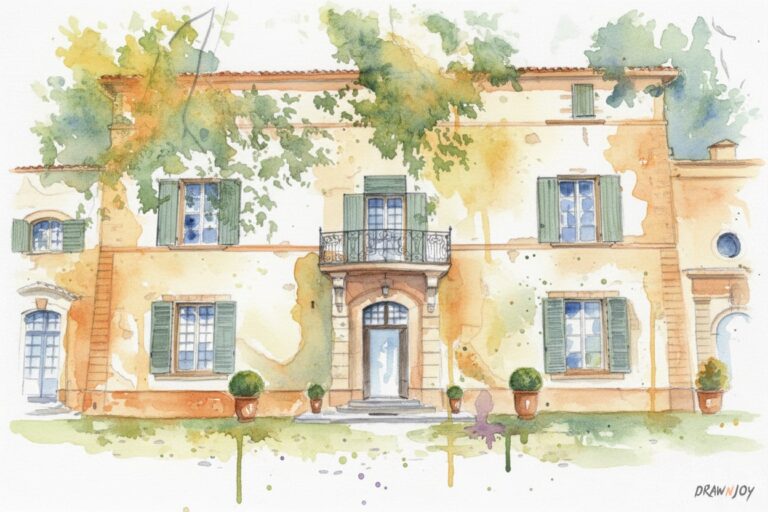
Note: The reference photo is real, while the sketch and the colored version were created with the help of AI to serve as inspiration for your own drawing.

Comments